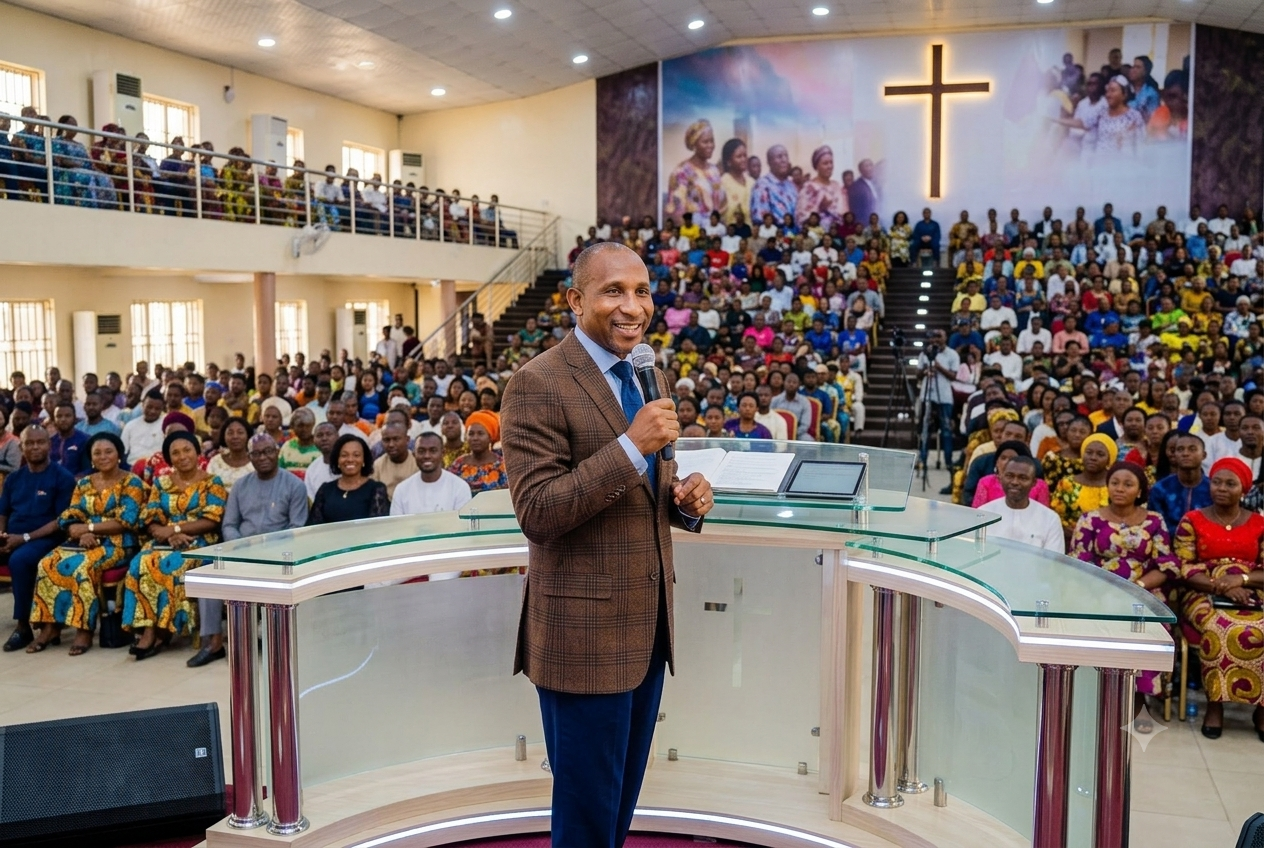
You know God called you.
You have no doubt about that.
There was a moment — perhaps in prayer, perhaps in the quietness of your room — when you felt something stir inside you that no human being could have placed there. A holy weight. A divine appointment. A certain knowing.
So you obeyed.
You planted the church, or you took over the pulpit, or you stepped into the role God had prepared for you. And for a season, there was momentum. New faces. Excitement. A sense that something great was being built.
But somewhere along the way... it slowed.
Attendance levelled out. The growth you prayed for never quite came. Or it came for a season — then retreated. Visitors walked through your doors on Sunday and you never saw them again. You shook their hands. You preached your heart out. You even followed up with a few of them personally. But they just... drifted.
"What am I doing wrong, Lord?"
You have asked that question more times than you can count.
And it is not for lack of effort. You preach faithfully, week after week. You pray. You fast. You organize programs and special services. You invite guest ministers. You attend conferences. You take notes. You come home inspired.
But within a few weeks... things return to exactly where they were.
The same fifteen people. The same forty people. The same patterns. The same ceiling.
"Maybe I am not doing enough."
So you do more. More prayer. More fasting. Another revival. Another outreach. Another program.
And still.
Your leaders — the few you do have — are not carrying responsibility the way you need them to. You end up doing nearly everything yourself. Preaching. Visiting. Counselling. Organizing. Marketing. Designing. Posting on social media. Running the WhatsApp groups. Managing finances.
"I didn't know ministry would look like this."
You are tired. Not of God. Not of the calling. But of doing everything alone, without a clear system, without a roadmap — and watching little return on all the energy you pour out every single week.
And the thought that haunts you most?
"Is God not blessing my church because of something in me?"
You would never say that out loud. But late at night, it whispers.
Let me tell you something right now: the problem is not your prayer life. It is not your preaching. It is not your faith. And it is absolutely not God's hand being withheld from you.
The problem is something entirely different. And once you understand it, everything changes.
Because I am about to share with you a simple, proven, 90-day biblical framework that completely transformed my ministry — and the ministries of dozens of pastors I have quietly shared it with across Nigeria and beyond.
The most effective pastors in church history understood something that many of us were never taught in Bible college or seminary.
They understood that prayer is the engine, but systems are the vehicle.
Nehemiah prayed — and then built a wall using organised teams. The early church in Acts prayed — and then appointed deacons so the apostles could focus on the Word. Jesus Himself poured into twelve men intentionally, methodically, over three years — not randomly, not reactively. Intentionally.
Somewhere along the way, a generation of pastors was told that "systems" belong to the business world, and that relying on them somehow diminishes faith. I believed that lie for almost a decade.
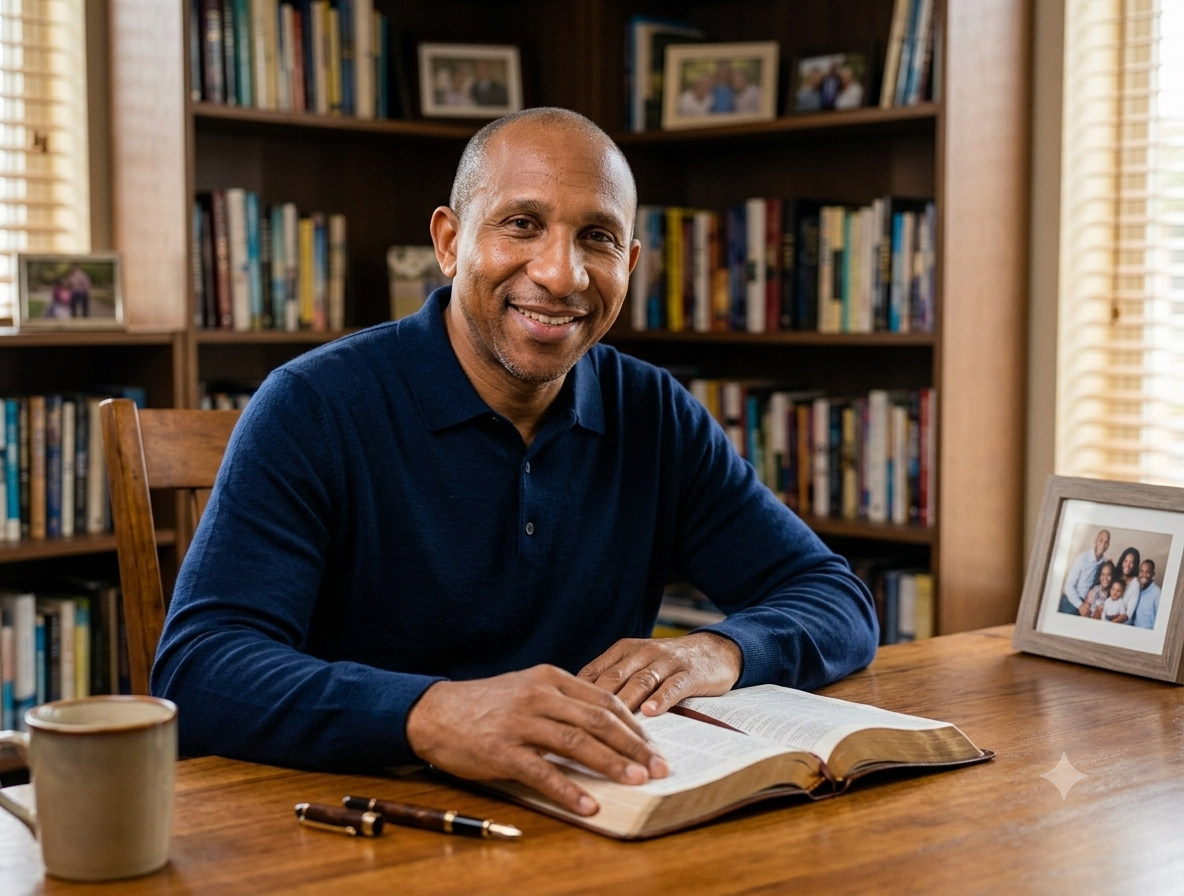
My name is Pastor Daniel Ayo.
The first thing you should know about me is that I am not a mega-church pastor. I am not a famous televangelist. I have no large denomination behind me. I am a shepherd — a regular pastor leading a local church — who spent nearly ten years doing everything I knew to do... and wondering why sustained growth kept eluding me.
Let Me Tell You My Full Story — Because It May Sound Exactly Like Yours
I planted my church in 2015 with nothing but a burning conviction and eleven founding members.
The first year was beautiful. Raw, imperfect, beautiful. We met in a small hall. We worshipped loudly. The Holy Spirit moved. People were saved. Two families joined. Then three more.
I remember thinking: "This is it. This is what I was born for. By the grace of God, in five years we will be filling a 500-seater building."
By year three, we had grown to about sixty members. It felt like a miracle. And it was.
But somewhere between year three and year five, something strange happened.
We stopped growing.
Not dramatically. Not overnight. It was like a slow leak in a tire — you don't notice it immediately, but one morning you wake up and the vehicle simply will not move. Attendance plateaued at between fifty and seventy people, week after week, year after year.
Visitors came. I know they came, because I greeted them at the door. I even have their names in old notebooks — people who attended once, twice, three times... and then disappeared. I followed up with a few of them. Some said they found another church closer to their home. Others simply stopped answering calls.
"Lord, what is happening?"
The emotional cost was real. My wife, Blessing, noticed before I was willing to admit it. She watched me come home exhausted every Sunday evening — not from the joy of ministry, but from a deep, quiet frustration I couldn't name. She would place food in front of me and I would stare at it, replaying the service in my mind, wondering what I could have done differently.
There were conversations between us — gentle but honest — about the weight I was carrying alone. She saw that I was counselling, preaching, visiting, organizing, posting on social media, managing our WhatsApp groups, preparing sermons, tracking finances, and running every single program. With very little help. With leaders who were willing but undertrained and underdeployed.
"Daniel," she said to me one evening, "you are doing the work of ten men. But you were not called to do it alone."
I knew she was right. I just did not know what to do differently.
My turning point — my confrontation with reality — came on a Tuesday afternoon in 2021. I sat with my old notebook, tallied up the names of every first-time visitor we had received over the previous eighteen months. Sixty-seven people had walked through our doors in that period.
Sixty-seven.
And of those sixty-seven, only four were still with us.
I stared at that number for a long time.
Four.
We were like a hospital with a leaking ward. Patients arrived. We treated them. They left before recovery was complete. And I had no system — absolutely no intentional system — for assimilation, follow-up, or connection.
My godfather in ministry, an older pastor who had known me since seminary, came to visit around that time. We sat in my study after dinner and I showed him the notebook. He looked at the numbers, sipped his tea slowly, and then said something I have never forgotten:
"Daniel, when God sends rain, the farmer who has prepared his field harvests. The farmer who has not... watches the rain run off the hardened ground into the gutter. The rain was the same. The difference was preparation."
That conversation changed my life.
But before it did, I had spent years trying everything I could think of.
Everything I Tried That Did NOT Work
1. More prayer and fasting, without changing anything else. I would fast for three days, pray for breakthroughs, feel spiritually renewed — and return to the same stagnant patterns. Prayer is essential. But prayer was never designed to be a substitute for stewardship. God answers prayer. He also expects us to put our hands to the work He reveals.
2. Revival meetings and special services. We hosted crusades. We brought in powerful ministers. Attendance would spike for one or two Sundays. Then — like clockwork — it would retreat back to baseline. Because we had no system to receive the influx, no follow-up process, no assimilation pathway. People came in through the front door and quietly left through the side door.
3. Inviting guest ministers and guest preachers. Every guest brought their own audience. The Sunday they preached, our hall felt alive. The Sunday after, many of those visitors were nowhere to be found. We had not made it easy for them to connect, to return, to belong.
4. Random social media posting. I started a Facebook page. I posted sporadically — sermon clips, event announcements, occasionally a motivational quote. No strategy. No consistency. No intentional funnel from our digital presence to our physical gathering. It produced almost nothing measurable.
5. Copying strategies from larger churches. I visited mega-churches. I studied their programs. I brought those programs home and tried to implement them in a congregation of sixty people with three functioning leaders. The programs were built for a different context, a different team, a different budget. Most of them collapsed within weeks from sheer understaffing.
6. Conference notes and YouTube advice. I attended church-growth conferences. I filled notebooks with principles from gifted speakers. I came home excited, energised, full of good intentions — and discovered, every time, that the distance between inspiration and implementation was an ocean I did not know how to cross. The principles were sound. But there was no practical, step-by-step roadmap built for a pastor in my exact context.
I was not lazy. I was not faithless. I was not unqualified.
I simply lacked a system.
The Conversation That Changed Everything
Back to my older mentor — Pastor Emmanuel Adeyemi, then in his late sixties, with forty years of ministry experience and a congregation that had survived economic crashes, political instability, and every other storm life had thrown at it. His church was not the largest in the city. But it was one of the healthiest.
Healthy leaders. Healthy structure. Healthy follow-up systems. Consistent, sustainable growth year after year.
After he said those words about the farmer and the rain, I leaned forward and asked him directly:
"What does 'preparing the field' look like in a church?"
He smiled — the kind of smile that comes from wisdom that has been earned, not borrowed.
"It looks like knowing exactly what you stand for and being able to say it in two sentences. It looks like having a clear pathway from 'visitor' to 'member' to 'minister.' It looks like raising leaders before you need them, not after. It looks like following up on every single person who visits — consistently, warmly, systematically. And in this day and age, it looks like having a meaningful presence where people already spend their time."
He paused, then added:
"Prayer brings God's power. Systems help you steward the people God sends. You are anointed, Daniel. Now become organised."
I almost pushed back. Part of me wanted to say: "But Pastor, shouldn't we just trust God?" As if organisation was somehow the opposite of faith.
He read my expression perfectly. "Did the early church not appoint deacons? Did Nehemiah not assign teams to sections of the wall? Organisation is not unbelief, my son. Disorder is not holiness."
I went home that evening and sat with my Bible for a long time. And I began to see what I had missed — right there in Scripture, woven through the entire story of God's people. Intentional structure. Delegated responsibility. Reproducible systems. Faithful stewardship of people and resources.
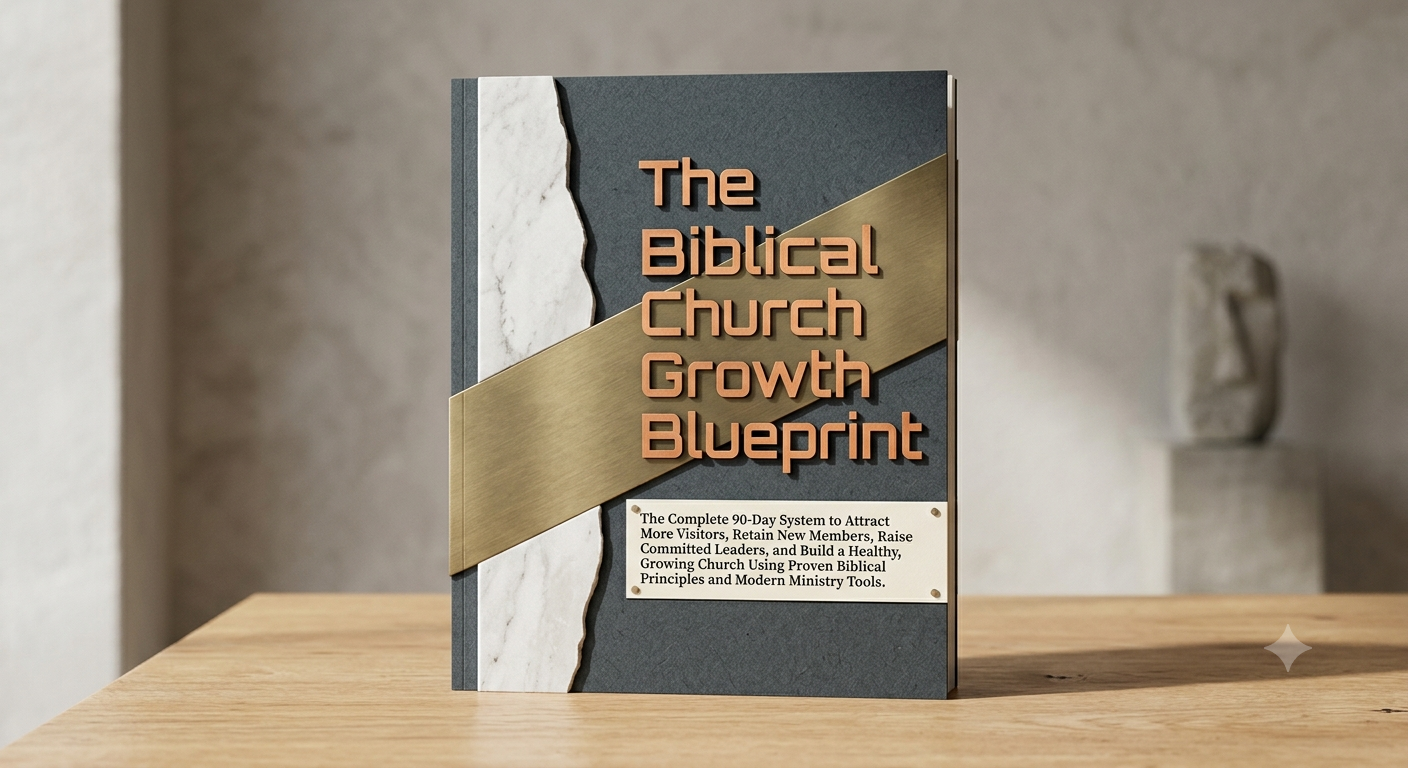
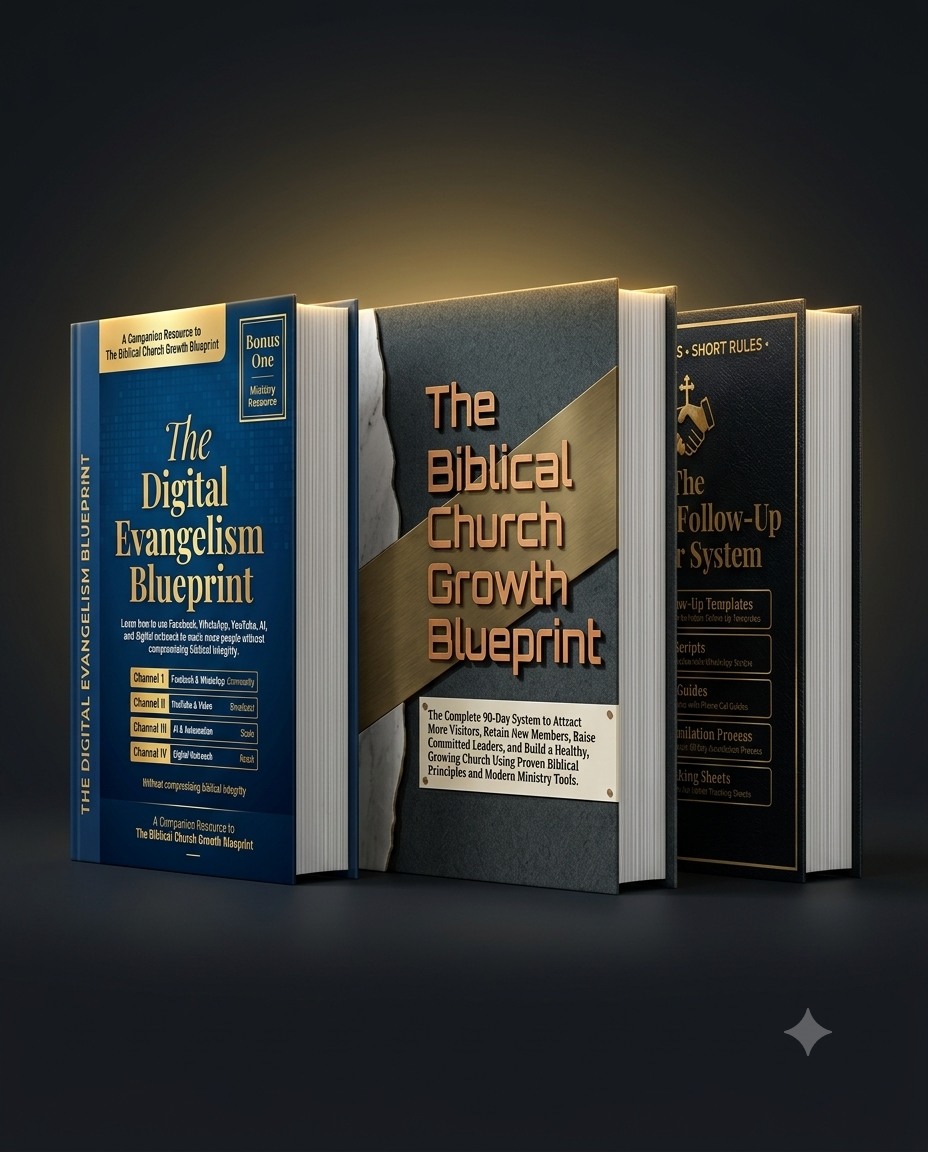
Over the next several months, I began to build — carefully, biblically, practically — what I now call The Biblical Church Growth Blueprint™ Framework.
What Happened When I Implemented It
I will be honest with you. The first two weeks felt uncomfortable. I was restructuring habits and patterns I had operated in for nearly a decade.
By Day 7, I had completed a proper assessment of our church's health — and for the first time, I could see clearly where we were strong and where we were genuinely broken. That clarity alone was worth everything. You cannot fix what you cannot name.
By Day 21, we had a visitor follow-up system in place for the first time in our church's history. Every first-time visitor received a warm, personal follow-up — a phone call within 48 hours, a WhatsApp message within the week, a personal visit within the month. Simple. Consistent. Transformative.
By Day 30, I had identified three leaders in my congregation who had been sitting quietly in the pews for years — gifted, available, and waiting to be deployed. They were not passive. They were simply not invited. Within thirty days, they were carrying real responsibility. The weight on my shoulders began to lift.
By Day 45, our church's internal systems — planning, communication, member care — had shifted from reactive to proactive. We stopped running from fire to fire. We started moving with intention.
By Day 60, our digital presence had become consistent and purposeful. Our WhatsApp broadcast reached people during the week, not just on Sundays. Our Facebook page began reflecting what our church actually stood for.
By Day 90, I looked at our congregation and saw something I had not seen in years.
Health.
Not just attendance numbers. Health. Engaged members. Functioning leaders. Retained visitors. A community that was growing — not just numerically, but spiritually, structurally, sustainably.
My wife, Blessing, noticed before I said anything. She looked at me one evening and said:
"You came home tonight and you were not exhausted. You were tired from work — that is normal. But the other thing, that heavy, distant look... it is gone."
She was right. Ministry had become a joy again. Not because it was easier — but because I was no longer the only load-bearing wall in the entire structure.
Others Began to Notice Too
As word spread quietly among pastors I trusted, I began sharing elements of the framework informally. The responses were consistent.
Pastor Emeka in Lagos — a church planter with a congregation of about thirty-five members — implemented the visitor follow-up system alone and saw three consecutive months of visitor retention for the first time in four years. "Daniel," he called me to say, "we have never kept this many people. It is not magic. It is just being organised in love."
A female pastor in Abuja — leading a congregation of women and young professionals — used the leadership development module to raise two deputy leaders who now run mid-week services. She told me the framework gave her permission to stop doing everything herself. "I thought delegating meant I was weak," she said. "This showed me it is the most pastoral thing I can do."
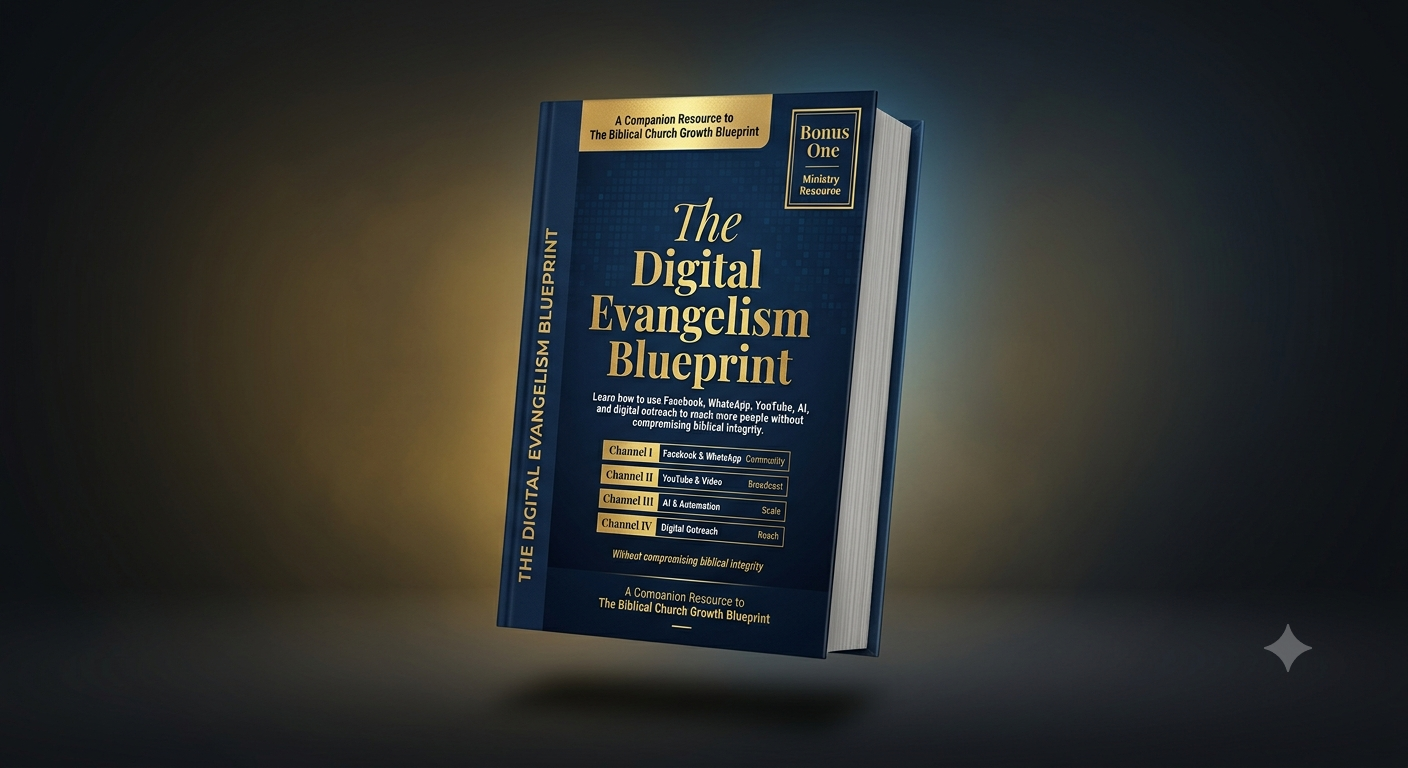
A church planter in Enugu applied the digital evangelism principles and saw his church's WhatsApp community grow from twelve members to over one hundred and fifty engaged contacts in sixty days — with consistent mid-week spiritual content, prayer sessions, and visitor touchpoints.
The framework was working. Consistently. Reproducibly. Biblically.
And that is when I knew I could no longer share it just one conversation at a time.
✍️ Share Your Experience